

The Farm Journal
Seasonal musings, behind the scenes of life on the farm, and our trek to implement regenerative practices. Slow down, explore, and soak up a little “farm time” with us.

Welcome to Sunset Ridge
A Second-Generation Farmer’s Journey into Regenerative Agriculture
“The land gives so much to us, why wouldn’t I give so much back?”
Twenty Years on The Land
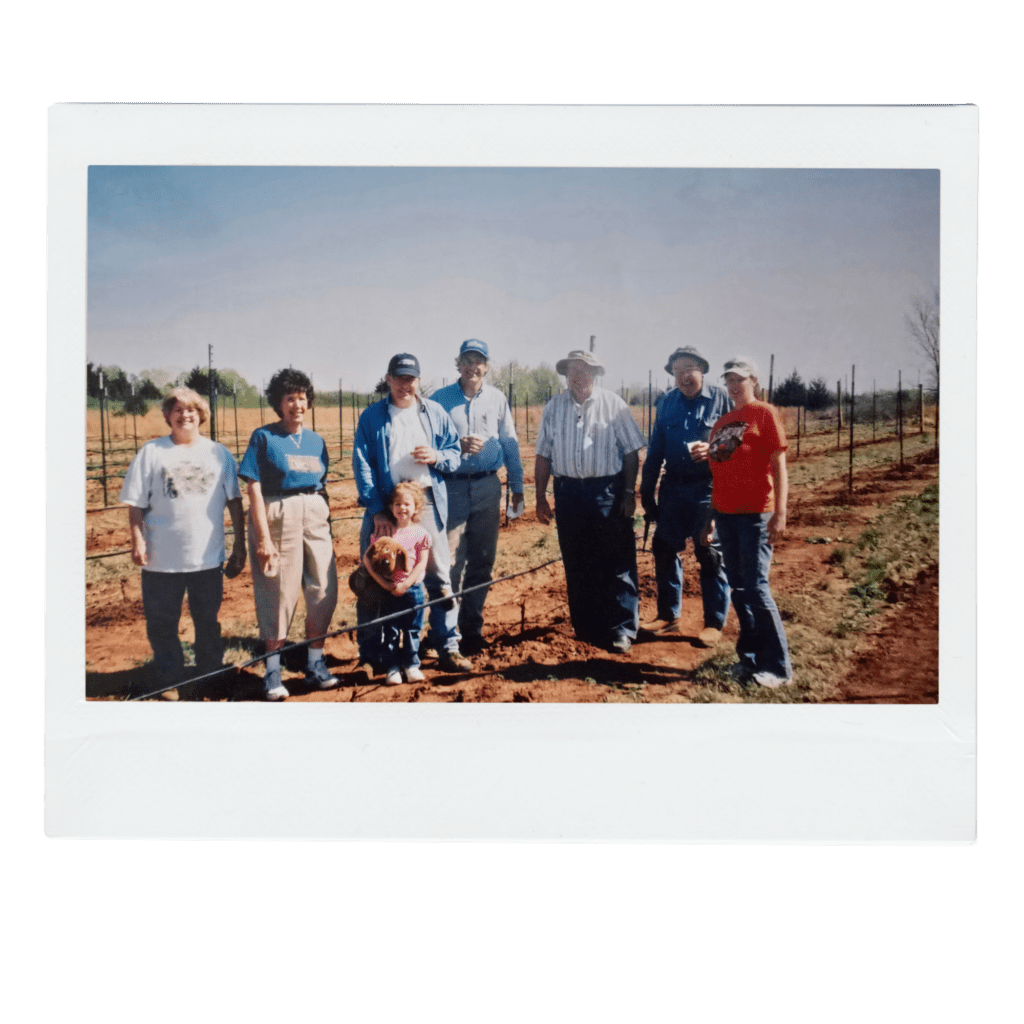
Sunset Ridge Vineyard is a former 10-acre vineyard managed traditionally by my dad. I got to farm with him seasonally, off-and-on, for 20 years. Working alongside my dad, I learned how to plant, prune, harvest, and deliver wine grapes.
The Auction
After he passed, I had a really hard time letting go of the land. As a family, we felt like the best option at the time was to auction the land and equipment.
With tears in my eyes as we arrived on a cool November morning at the farm for the auction, the equipment sold off piece by piece, as did the land. My brothers Jeff and Lynn and I had groomed the land for the sale and everything was so clean and trim.
The Land Returns
As people started loading up their goods from the auction, the couple that bought the land started asking a lot of questions, and it became clear they had a lot of work and learning to do from afar. After they got back to their home state, they realized they had gotten into something that was too big for them at the time, and they backed out.
That was our sign that it was time for us to become the stewards of this land. When I found out that they backed out, I felt even more confirmation that I should be a Farm Manager.
Discovering Regenerative Agriculture
Before my dad passed, I took a summer Introduction to Horticulture class at a local university on a whim. I loved the class! When I look back, this was the awakening of this path for me. After his passing, I began learning about regenerative agriculture, and there was no turning back!
To turn my focus to a positive activity as the world shut down for COVID, I was reading a lot of books, researching online, talking to a brother who was already knowledgeable and practicing several of these methods, listened to some podcasts about women shepherds and organic wine production, and the more I heard about regenerative agriculture, the more it felt like a fit for the feelings I didn’t know how to express about caring for the land.
I was fortunate to be chosen as a Sand County Foundation Land Ethic Mentee and a cohort member of NCAT’s Women, Livestock, and the Land. I attended the Agroforestry Academy at the University of Missouri, Columbia. I am grateful for the information and help received from many sources, including the Oklahoma Conservation Commission, Oklahoma Forestry Service, Catalyzing Agroforestry Project, Noble Research Institute, Kerr Center for Sustainable Agriculture, Oklahoma State University horticulture course, and many more.
I agree with The Noble Research Institute’s explanation of regenerative agriculture, “At its core, regenerative agriculture is the process of restoring degraded soils using management practices (e.g., adaptive grazing, no-till planting, no or limited use of pesticides and synthetic fertilizer, etc.) based on ecological principles.
Regenerative agriculture strives to work with nature rather than against it. It is more than just being sustainable. It is about reversing degradation and building up the soil to make it healthier than its current state.”
My Connection to The Land
I know I had an underlying attachment to the land because of the memories with my parents, aunt and uncle, cousins, brothers, and friends on the land, but there was something deeper that I couldn’t explain. It felt like a spiritual connection to the act of stewarding the land in a kind way.
The land gives so much to us, why wouldn’t I give so much back?
I learned I didn’t want to spray harmful chemicals, I didn’t want to view the care of the land as a consumer only, and I wanted to live and work the farm and reap the benefits of that life.
My land ethic began to emerge with regenerative practices as its foundation.
First Step: Silvopasture
Since then, I decided to implement a silvopasture operation that integrates trees/shrubs, forage, and livestock in the same area. 2025 was our first year to take steps in implementing my silvopasture plan with a fall cover crop and some tree seedlings.
My cover crop should be nutritious for the sheep I plan to graze, and the trees should provide food, shade, and a windbreak. I broadcast an inoculated cover crop seed mix including cereal rye, winter peas, rapeseed, phacelia, black oats, and sweet alyssum. Tree seedlings include pecan, mulberry, and persimmon.
The Journey Ahead
We also seeded a small pollinator habitat. Each year, I learn more and more, continue to build a network, and do my best to carry this vision forward.
What You’ll Find Here
This blog, The Journal, is where I’ll share seasonal updates from the land, lessons I’m learning as a beginning regenerative farmer, and honest reflections on what’s working (and what’s not). You’ll find behind-the-scenes looks at silvopasture implementation, cover cropping experiments, the reality of farm life, and the messy, beautiful journey of stewarding land with intention.
Coming soon: “A look at what each season actually looks like on the farm.”
I will share what I am planting and my next project in the vineyard as we continue to update plantings and infrastructure.
Subscribe to The Journal to get updates delivered straight to your inbox.
Thanks for being here,
Tiffany


Be the first to comment